
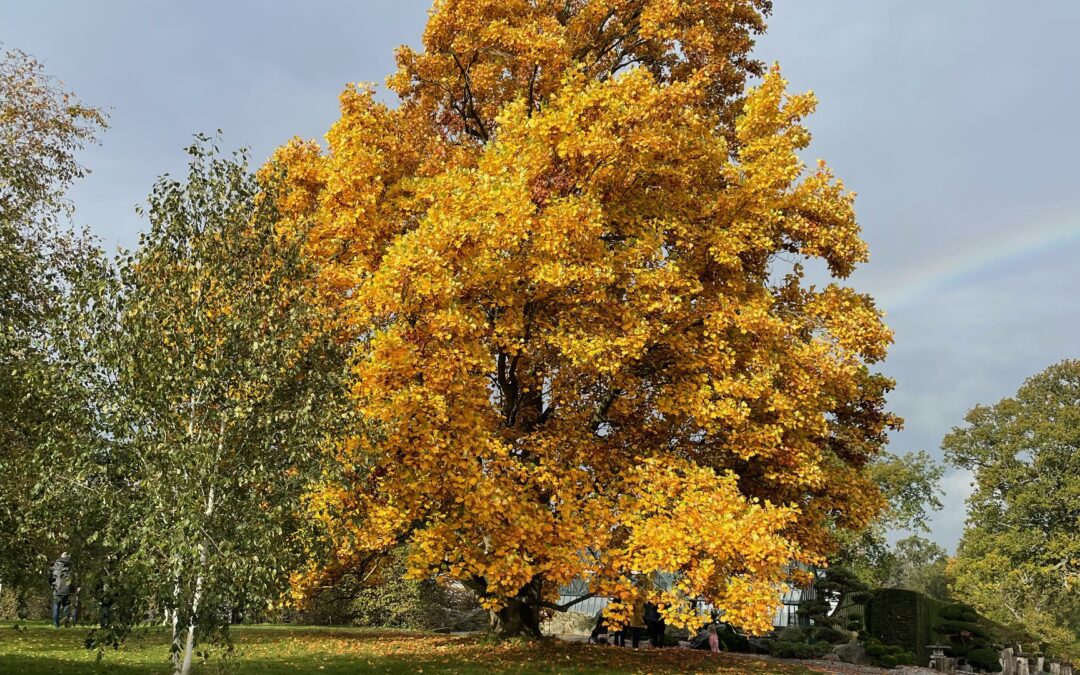
The 2026 November Garden
Jill Thomas writes…
Provided the weather allows this is the month when gardens settle into their winter rest. Growth has largely stopped, the borders are bare and the kitchen garden is producing only a few winter crops. With the cold, damp weather we could be forgiven to think as there is little to do, so we can stay in the warm indoors! The growing season continues but to a much lesser degree giving time for other jobs – tree and shrub planting, soil improvement, structural maintenance and tool care – all helps to be ahead in March.
November is one of the best months for bare-root planting, trees, hedging plants, fruit bushes and roses, costing a fraction of container-grown equivalents. Planting now gives plants the maximum time to establish before spring growth begins. Bare root plants can survive for several days out of the ground if kept cool and moist but if the ground is frozen heel in by digging a shallow trench in a sheltered place, lay in roots and cover with soil. The plants can survive for several weeks in their temporary accommodation without issue.
Vegetables
- Continue harvesting leeks (improve in flavour after a hard frost), kale (cold weather is when kale is most tender and nutritious), Brussel sprouts and winter cabbage
- Lift and store root vegetables, although parsnips improve in flavour after a light frost
- Digging over empty vegetables beds allows the rough surface to be exposed to frosts which will break down the clods to improve soil structure. No dig gardeners carry out this task in exceptional circumstances such as on preparing a new bed
- Inspect stored vegetables such as onions, potatoes, squash regularly for signs of rot and remove
Flowers
- Seed heads provide food for birds, dead stems provide overwintering habitat for beneficial insects and the structural interest of frosted seed heads and grasses is attractive
- Cut back tender perennials blackened by frost – pelargoniums, salvias and dahlias – and cover the crowns with a thick mulch of straw or bark
- Tulips, last month for planting
Mulch vegetable and flower beds
a generous layer of mulch – e.g. compost, rotted manure, leaves, hay, straw – now will incorporated over winter naturally by the earth worms
Lawns
Growing season is over so very little management is needed. Autumn feeds in November will not provide any benefit.
Try to not walk on frozen grass as the cells of individual grass blades will be damaged leaving brown marks. A blanket of leaves excludes light and traps in moisture creating ideal conditions for fungal disease and moss. Rake leaves regularly in areas with heavy leaf fall.
Tool and structure maintenance
Clean tools thoroughly, remove rust with wire wool, sharpen cutting edges and oil metal surfaces with a light coating of linseed or WD-40. Check garden structures and carry out any repairs needed before winter weather worsens them.